Accessible Accommodation Questions
A practical step-by-step guide to accessible accommodation questions, including preparation, instructions, common issues, tips, and next steps.
Accessible Accommodation Questions
Finding accessible accommodation is mostly about asking clear questions early and documenting answers, so you can compare options and avoid surprises at check-in. This guide walks you through preparing your needs, contacting a property, confirming details, and planning backup solutions. The goal is to reduce uncertainty and make your stay comfortable, whether you need step-free access, visual or hearing support, or specific room features. You do not need to be an expert; you just need a simple system and the right questions.
Fast Answer
- Ask specifically about the exact features you need, such as doorway width, grab bars, or visual alarms, and request a written confirmation.
- Confirm details again a few days before arrival, and have a backup plan in case something is not as described.
Before You Start
- Write a short list of your must-have access features, such as step-free entry, a roll-in shower, or a bed height that works for you.
- Check your own equipment needs, like whether you need to plug in a device or use a specific setting, so you can ask about outlets and space.
- Decide how you will communicate, such as by phone, email, or a relay service, and prepare to ask for written answers you can keep.
- Gather any documents or notes that explain your needs, and think about what you will do if a key feature is missing on arrival.
Step-by-Step Instructions
Identify your must-have access features
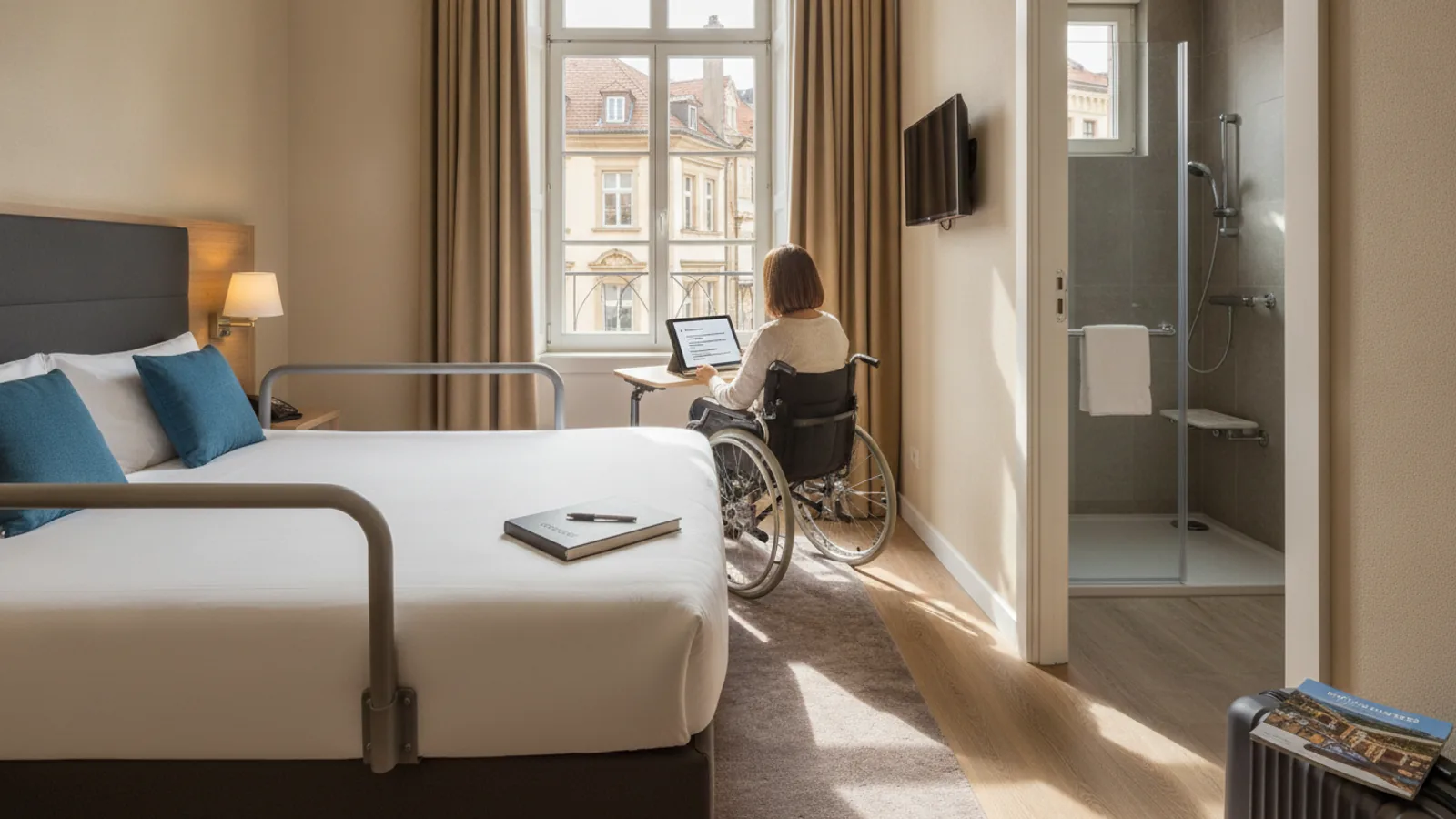
Start by making a short list of the features you truly need, not just the ones you prefer. Think about getting into the building, moving through the room, using the bathroom, and sleeping comfortably. For example, you might need a step-free entrance, a doorway that is wide enough for your mobility aid, a roll-in shower with a seat, or a bed that is low enough to transfer onto safely. Also note any features that would make the stay easier but are not essential, so you can compare options. This list becomes your script when you contact a property. A practical check is to test each item against your daily routine: if you use it every day at home, it likely belongs on your must-have list. Doing this first keeps you from being swayed by vague marketing words and helps you ask precise questions that get useful answers.
Research properties and prepare your questions
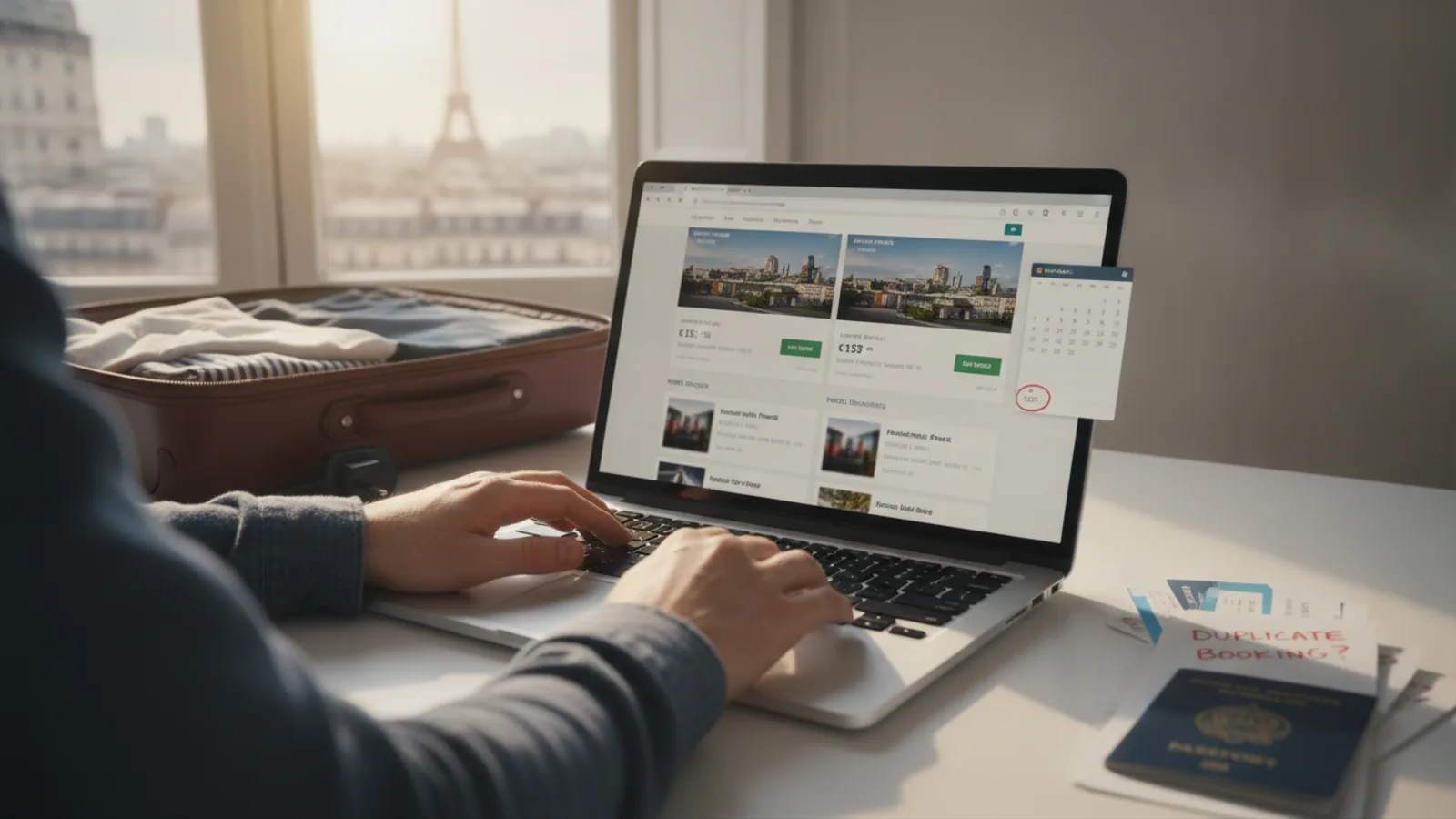
Once you know what you need, look for places that mention accessibility in their own descriptions, but do not stop there. Read the details they provide and note anything that is unclear or missing. Then write a short set of questions based on your must-have list. For example, ask about the width of the main doorway, the height of the bed, the type of shower, and whether there are steps anywhere on the route from the entrance to the room. Also ask about the bathroom layout and whether there is space to turn a wheelchair or walker. A practical check is to compare the answers you find online with your list; if a property does not answer a key question, that is a sign you need to ask directly. Preparing questions in advance saves time and helps you avoid repeating the same conversation with every place you contact.
Contact the property and ask for specific answers
When you contact a property, use your prepared questions and ask for details rather than yes or no answers. For instance, instead of asking if the room is accessible, ask how wide the bathroom door is and whether there is a step into the shower. If you speak by phone, take notes and ask the person to send the answers in writing, such as by email or a message. If you use a relay service or another communication method, explain that you need written confirmation for your records. A practical check is to repeat back what you heard and ask if you understood correctly. This matters because spoken details can be misremembered, and written answers give you something to refer to later. It also helps you spot contradictions between what different staff members say, which is a warning sign that the information may not be reliable.
Confirm details in writing before you book
Before you make a reservation, ask the property to confirm your must-have features in writing. A simple message that lists each feature and the answer you received is enough. For example, you might write: You said the room has a step-free entrance and a roll-in shower with a seat. Please confirm these details are correct for the room I am booking. Keep a copy of this message. A practical check is to compare the written confirmation with your original list and make sure every must-have item is addressed. This step matters because it creates a clear record and reduces the chance of arriving to find that a key feature is missing. If the property will not confirm in writing, treat that as a warning and consider other options. Written confirmation also gives you a reference point if you need to resolve a problem later.
Plan for arrival and check the room
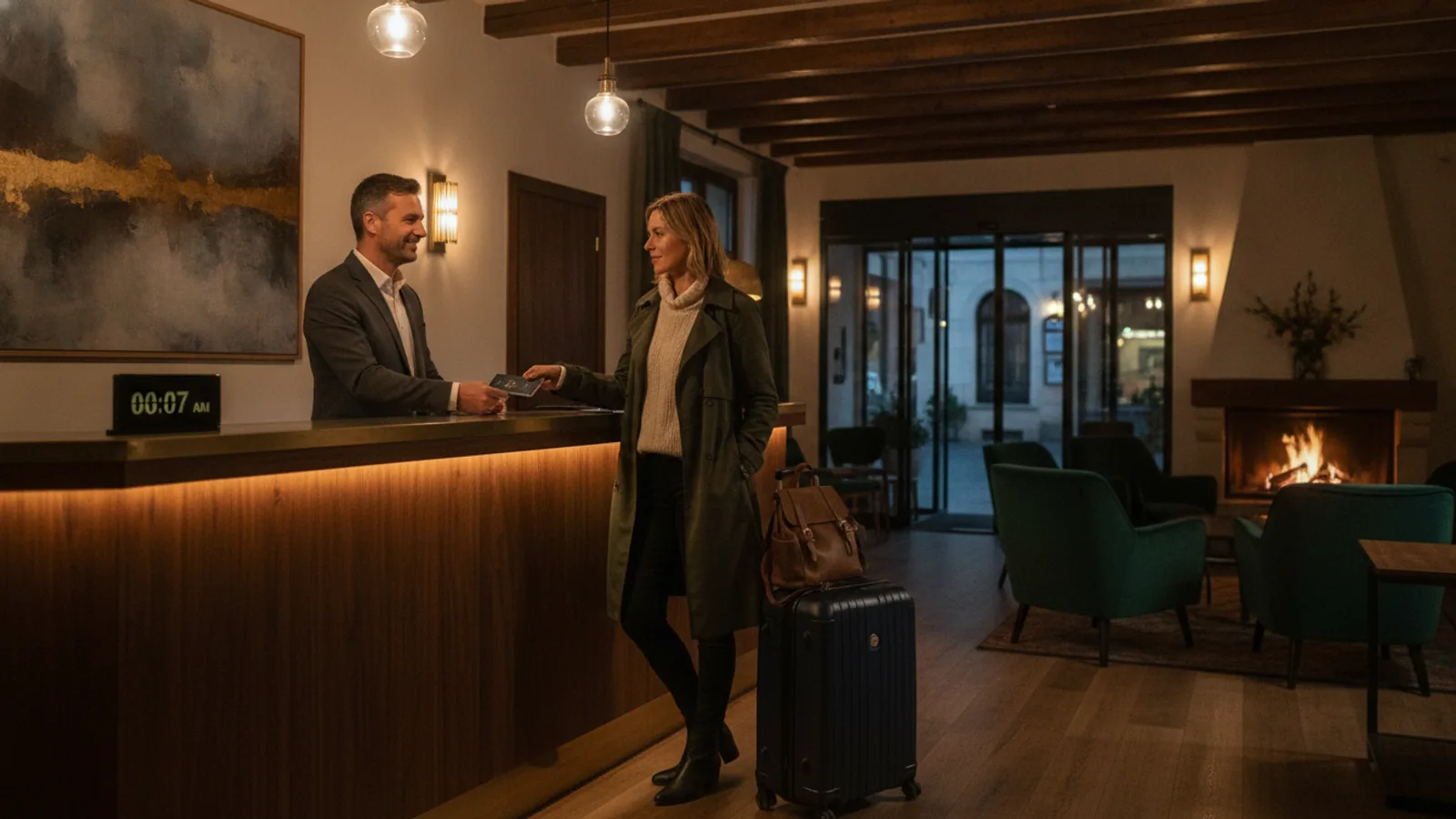
When you arrive, check the room against your list before you settle in. Start with the entrance and the path to the room, then look at the bathroom, the bed, and any other features you confirmed. For example, open and close the bathroom door, test the shower seat if there is one, and make sure you can move around the bed safely. If something is not as confirmed, tell the front desk right away and ask for a solution. A practical check is to keep your written confirmation handy so you can show what was promised. This matters because fixing a problem early is usually easier than waiting until later, when other rooms may be taken. If the property cannot fix the issue, ask about a different room or a backup plan. Being calm but clear about what you need helps staff help you faster.
Follow up and share feedback
After your stay, take a few minutes to note what worked well and what did not. If a feature was missing or misdescribed, send a short message to the property explaining what happened. This can help them improve for future guests and may also help you if you plan to return. If everything was as confirmed, a brief thank you note is still useful because it encourages good service. A practical check is to compare your notes with your original list and see whether any questions you asked were unclear or unhelpful. This matters because it helps you refine your questions for next time and makes you a more effective advocate for your own needs. You can also share your experience with others who may be looking for similar accommodations, but focus on facts and specific details rather than general complaints.
Quick Reference
| Situation | Action | Why it helps |
|---|---|---|
| You are comparing two properties and both say they are accessible. | Ask each property the same set of specific questions about doorway width, bathroom layout, and step-free routes, and request written answers before you decide. | The word accessible can mean different things, so comparing specific details helps you choose the property that truly meets your needs. |
| A property gives you a vague answer like it should be fine. | Politely ask for a precise detail, such as the exact measurement or a yes or no about a specific feature, and ask them to confirm it in writing. | Vague answers often hide missing features, and getting specifics in writing gives you a record you can rely on. |
| You arrive and find that a confirmed feature is missing. | Tell the front desk immediately, show your written confirmation if you have it, and ask for a different room or another solution right away. | Problems are usually easier to fix early, and having written proof helps staff understand and address the issue quickly. |
Common Issues
- The property uses general words like accessible or disability friendly without details.: Ask for the specific measurements and features you need, such as door width, shower type, and bed height, and request the answers in writing so you can compare them with your list.
- You get different answers from different staff members.: Ask to speak with a manager or the person responsible for accessibility, repeat your questions, and ask for a single written confirmation that resolves the differences before you book.
- The room meets some needs but not all, and you are unsure whether to book.: Make a list of your must-have items and check which ones are missing. If a missing item is essential, look for another property or ask if the property can provide a portable solution, such as a shower chair, before you decide.
Advanced Tips
- Ask about the route from the parking area or transit stop to the room, including any curbs, slopes, or uneven surfaces that could affect your mobility aid.
- Request a room on a lower floor or near an exit if you need to leave quickly, and confirm that the path is step-free and well lit.
- Ask whether the property has a quiet room or a room away from elevators and ice machines if you are sensitive to noise, which can affect sleep and comfort.
Final Checklist
- I have a written list of my must-have access features and I use it every time I contact a property.
- I asked for specific details, not just yes or no answers, and I got the important ones in writing.
- I confirmed the details again a few days before arrival and I have a backup plan if something is missing.
- I know what to do and who to ask if a confirmed feature is not available when I arrive.
FAQ
What should I do if a property will not confirm details in writing?
If a property will not confirm important details in writing, treat that as a warning sign. You can ask to speak with a manager, explain that you need written confirmation for your records, and see if they will agree. If they still refuse, consider looking for another property that is willing to put answers in writing. A written record helps you avoid surprises and gives you something to refer to if a problem comes up later.
How far in advance should I contact a property about access needs?
Contact the property as soon as you are seriously considering it, ideally before you book. This gives you time to ask questions, get written answers, and compare options without pressure. If you are booking close to your travel date, ask right away and confirm again a few days before arrival. Early contact also gives the property time to prepare a room or find a solution if a specific feature is limited.
What if I need a feature that is not listed in the property description?
Ask the property directly about the feature you need, even if it is not listed. Many places can provide a portable item or adjust a room if you ask in advance. Be specific about what you need and why, and ask if they can confirm it in writing. If they cannot provide it, ask if they can recommend another option or if there is a nearby property that can meet your needs.